 Garage Door and Parts Supplier California
Garage Door and Parts Supplier California
Garage Door and Parts Supplier California
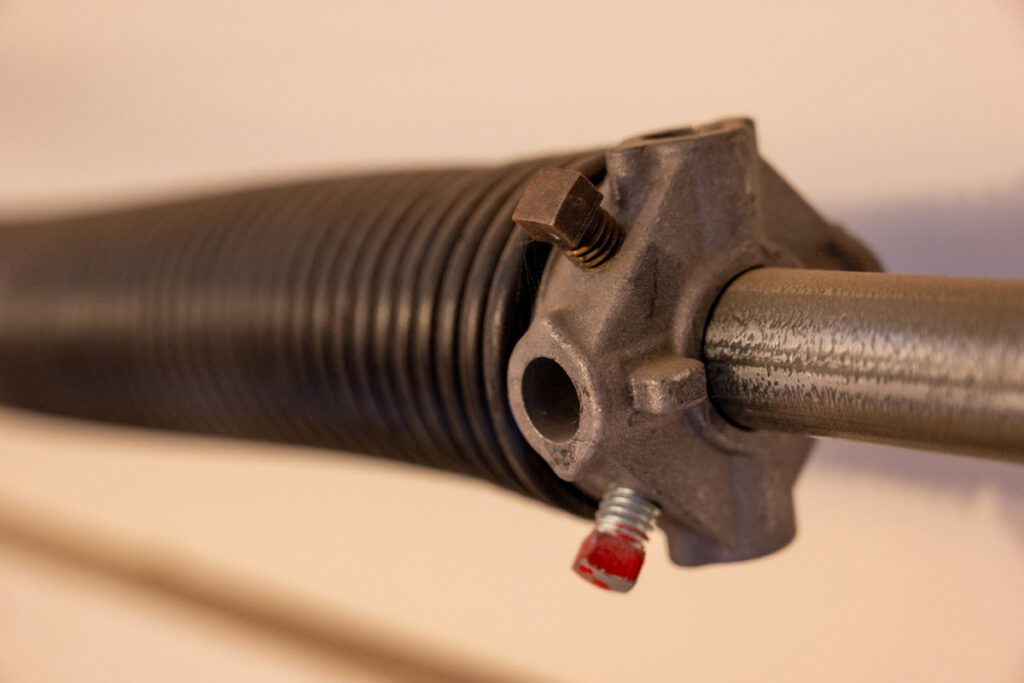
Torsion springs are the most powerful mechanical components in any garage door system. When a door is raised and lowered on a property along Kingston Road, near Bourne Hall Park, or on a quiet street off Ruxley Lane, that movement is driven almost entirely by stored spring energy. The spring does the heavy lifting so the motor or the person pulling the handle does not have to.
That stored energy is also what makes torsion spring work genuinely dangerous without the right approach. A spring under load that slips, snaps, or unwinds suddenly can cause serious injury in a fraction of a second. Controlled adjustment force is not a preference in this trade. It is the only safe way to work with these components.
Understanding the full range of garage door operational component systems helps put spring work in context, but the focused detail on force control during spring adjustment is what this article is about.
A torsion spring sits on a steel shaft above the door opening. When the door closes, the spring winds up and stores mechanical energy. When the door opens, that energy releases and assists the lift. The spring is doing most of the work on every single cycle.
The amount of energy stored depends on the spring rate, the number of turns wound in, and the wire diameter. A standard residential door spring can hold enough force to cause a serious hand or arm injury if it releases unexpectedly. Double-width garage doors found on properties near Ewell Court or along Chessington Road carry even heavier spring systems with proportionally more stored energy.
This is why every adjustment to a torsion spring must be made in a deliberate, step-by-step sequence using tools that give the technician full control at every point in the process.
Winding bars are the primary tool for adding or removing turns on a torsion spring. They insert into the winding cone at the end of the spring and allow the technician to apply force in a controlled arc. The bars keep hands and fingers away from the cone itself, which is where most spring injuries happen when improvised tools are used.
The right winding bars are matched to the cone size on the spring. Using bars that are too short reduces the leverage available and forces the technician to apply more body effort to move the spring. Using bars that are too long creates over-leverage and makes it harder to feel resistance changes during winding. Technicians working near Stoneleigh or along West Street know that the fit between bar and cone is not something to guess at.
A proper set of Torsion Spring Winding Bars is sized correctly for residential and commercial cone standards, and the steel grade matters too, since a bar that flexes under load gives inaccurate feedback and reduces control.
Controlled force during adjustment starts long before the winding bars come out. It starts with identifying the exact spring specification for the door. A spring that is too light for the door weight will never reach the correct balance point regardless of how carefully it is wound. A spring that is too heavy will over-assist the door and create a different set of problems.
Wire diameter, inside diameter, and overall length determine how much force a spring delivers per turn. Getting all three right is essential. Many technicians and homeowners shop Spring Measurement Gauge tools to remove uncertainty from the process. These tools help confirm exact wire thickness and coil dimensions so replacement or adjustment calculations are based on accurate measurements rather than estimation.
Properties along Epsom Road, near Ewell West Station, and on roads backing onto Nonsuch Park include a wide variety of garage door ages and sizes. Older doors especially may have non-standard spring specs that need careful measuring rather than assumptions based on door width alone.
Winding a torsion spring is not a single movement. It is a series of quarter-turn increments, each one checked before the next is applied. This incremental approach is what makes the process controllable. Rushing through half turns or full turns at once reduces tactile feedback and makes it harder to detect if the spring is seating correctly or if the cable drum is tracking properly.
The number of turns required depends on the door height and the spring specification. Most standard doors fall in a range that experienced technicians know well. But even experienced hands count every quarter turn, because the consequence of being out by a full turn in either direction is a door that is either dangerously over-tensioned or fails to lift properly under load.
Working near Ewell Village Conservation Area, where period properties sometimes have non-standard opening heights, turn counts may differ from what a technician would expect on a newer build. Measuring first and counting carefully during winding is the only reliable approach.
Before any winding work begins, the torsion bar must be locked in place. Locking pliers clamped to the shaft on both sides of the spring bearing plate prevent the shaft from rotating while the technician works. Without this step, any accidental movement during winding can shift the entire shaft and throw off the cable alignment.
The door itself should be in the fully closed and lowered position for torsion spring adjustment. Attempting spring work with the door partially open means working against both the spring and the door weight simultaneously, which removes the control that makes the process safe.
Any system that also involves rail-guided door travel systems needs the track and carriage hardware checked and confirmed secure before spring tensioning begins, since track flex under a tensioned spring load can cause misalignment that is hard to diagnose after the fact.
Once the winding is complete and all set screws are tightened, the balance test is the final verification step. The door is raised manually to waist height and released. A correctly tensioned door holds position within a few centimetres. A door that drops sharply needs more tension. A door that rises on its own is over-tensioned.
This test should be repeated twice. The first release checks gross balance. The second checks whether the door holds steady after a moment, since some imbalance only shows once the spring settles into the new wind position. Technicians finishing jobs near Ewell Downs or along roads close to Gibraltar Recreation Ground run this check before packing any tools away.
Buying Garage Door Winding Bars sets with calibrated length and verified steel construction makes the final adjustment process easier because technicians can feel spring resistance more accurately and make small corrections without the risk of over- or under-winding.
A properly adjusted torsion spring system is quiet, smooth, and holds the door in balance at any point in its travel. The motor runs lighter, the cables stay evenly tensioned, and the rollers do not drag against the track. These are the signs that the spring force matches the door weight correctly and that the adjustment was done with the right tools and the right technique.
The controlled force approach to spring adjustment is not about slowing the job down. It is about doing the job once and having it hold. A spring that is adjusted carefully with proper winding bars, accurate measurements, and a final balance test does not need revisiting for years under normal use conditions.
For residential doors across the area, from properties near Bourne Hall and St Mary the Virgin Church to streets running off London Road and Hogsmill riverside, the same principles apply every time. Good tools, careful counting, and a systematic approach are what produce results that last.
Address: 4949 Florin Perkins Rd Ste 30A, Sacramento, CA 95826
Phone: (916) 414-9070
Legacy Garage Door Depot, with supplier stores in Santa Clara and Sacramento, delivers premium garage door parts at competitive prices. The firm provides a comprehensive range of components for homeowners, technicians, and garage door companies. Their inventory includes reliable torsion and extension springs, garage door openers, Liftmaster models, remotes, and keypads. They also stock rollers, cables, tracks, hinges, and seals, offering a full selection of genuine and aftermarket replacement parts with fast local and online availability.
The store operates 24/7 online and can be reached on their primary lines at, +1 408-850-2617 and +1 916-414-9070.